Travel Tips and Drawbacks: Navigating Your Next Adventure
TRAVEL FOR LEISURE
4/25/202614 min read
Planning Your Trip
Traveling is an exciting venture that opens up a world of experiences. However, effective planning is essential to ensure your journey goes smoothly. Start by researching your destination thoroughly—understand the culture, language, and local customs beforehand. This preparation will not only enhance your travel experience but also help you blend in like a local.
Must-Know Travel Tips
1. **Pack Smart**: Always create a packing list tailored to your activities. Bring versatile clothing that can be mixed and matched, and don't forget your travel essentials like chargers and toiletries. Remember to leave some space in your suitcase for souvenirs!
2. **Stay Connected**: Although it’s tempting to unplug during your travels, having access to reliable communication methods can be a lifesaver. Consider purchasing a local SIM card or downloading offline maps to navigate your way around unfamiliar places.
3. **Culinary Adventures**: Food plays a pivotal role in travel. Be daring! Try local dishes that you can’t find back home. Street food often tells the story of a place, and it's usually wallet-friendly. Just remember to choose vendors that are bustling with customers to ensure freshness and safety!
Drawbacks to Keep in Mind
Despite the excitement of travel, it’s essential to consider potential drawbacks. One major concern is unexpected costs. Travel often involves added fees, whether for baggage, excursions, or even meals. Budget carefully, and always have a little extra set aside for emergencies.
Another drawback can be culture shock. Encountering new languages, customs, and ways of life can be both thrilling and overwhelming. Be patient, and allow yourself to adapt gradually. Sometimes, the most beautiful experiences come from navigating these challenging moments.
Lastly, the risk of travel illness can dampen your fun. Be mindful of hygiene, especially when trying street food, and stay hydrated. It’s always a great idea to keep a small first aid kit with you, just in case!
Conclusion
Every travel experience is unique, filled with memorable highs and occasional lows. With the right tips and awareness of potential drawbacks, you can set out on your next adventure ready to embrace everything it offers. So pack your bag, keep an open mind, and enjoy the journey ahead!
Travel Memories
From the Bush to the Blue: A Wild Journey Through South Africa & Mozambique
Some trips change you. This one does it twice.
10:58
Introduction: The Call of the Untamed South
Africa as a continent has always fascinated me. However, given its very many issues both health and security, I was vary to travel there but as the saying goes, things happen in its own time. A time arrived, when I visited and will ever be grateful.
There's a moment, usually somewhere between spotting your first elephant in the wild and biting into a coconut prawn on a beach so perfect it seems digitally rendered, when southern Africa stops being a destination and becomes an obsession. South Africa roars. Mozambique whispers. Together, they form one of the most dramatically diverse back-to-back travel experiences on the planet.
I crossed both countries over few weeks, moving from Johannesburg's electric energy to the absolute silence of the Kruger bush, down through the coastal chaos of Maputo, and finally out to the powder-white islands of the Bazaruto Archipelago. No two days looked the same. No two meals tasted the same. And by the end, I wasn't sure I'd ever want them to.
This is the trip. Here's how it went.
10:58
South Africa: Where Every Landscape Feels Like a Film Set
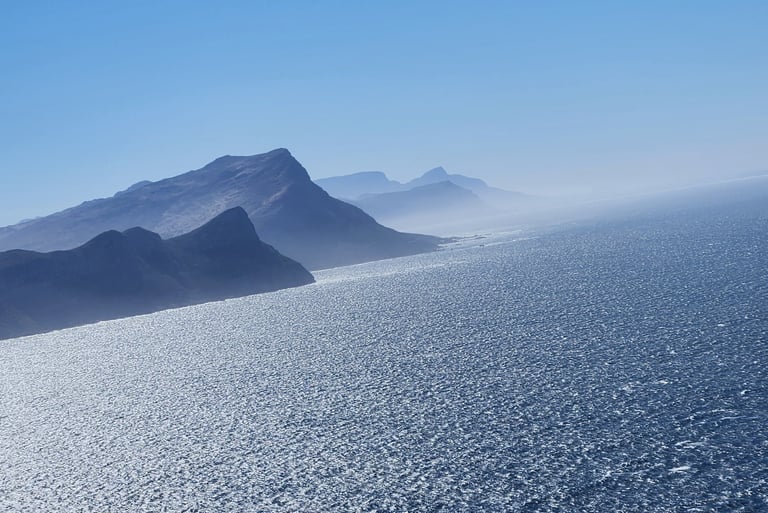
Cape of Good Hope
Cape of Good Hope is someting I had read only in my geography lessons. During the shipping days, British used it as a resting point. I could never imagine the untold beauty of the place , even if it meant admiring it in witn galeforce wind enough to throw you in the ocean:-). When I did see, a thought that came to my mind was that if there was indeed heaven then the gates od heaven must look like this!
Johannesburg, Grit, Gold, and Getting It
Joburg doesn't ease you in. It grabs you by the collar. Stepping out of the airport in a hired taxi, something that will remain in my memory. A huge Billboard advertising armoured cars with the slogan 'Dont reach home dead!' Joburg does not have the best reputation when it comes to security and this advertisement blaring did litte to assuage my thumping heart:-) Let me add, I had the best time there. Abolutely no issues and a trip to Soweto, supposedly the murder capital of the world, welcomed with colour, joy, history and hope. A skirt that iI bought and got altered in a matter of minutes there remains one of my most loved possession.
Mandela house where he started his revolution speaks volumes about people's power, their struggle, their commitment, passion and most of all their can do attitude despite severe odds.
The city hums with creative energy, street art splashed across Maboneng's crumbling facades, coffee shops serving single-origin pour-overs beside vendors selling boerewors rolls out of converted tuk-tuks. The Apartheid Museum is essential and gutting, a masterclass in how a country confronts its own shadow. Don't skip it.
It really hits to know cruelty of one human towards another. The jail was another place but the Supreme Court gave so much hope where the public gallery sits higher than the judges seat. This is to signify that all work for the people. Perceptions do not change thigs on the ground many a times, but cannot be denied that it does go a long way in changing the attitude of the coming generations, however slowly.
By night, Joburg proves it's no longer the city tourists used to avoid. Neighbourhoods like Melville and Parkhurst spill onto pavements with live jazz, grilled meat, and conversations that stretch past midnight. I ate samp and beans at a shebeen (a neighbourhood tavern) where a grandmother named Thandi told me, unprompted, that the secret to good food is cooking it angry. I believed her immediately.
Kruger National Park, The Silence Before the Roar
Kruger can safely be termed as a place on this planet where animals live and humans visit.
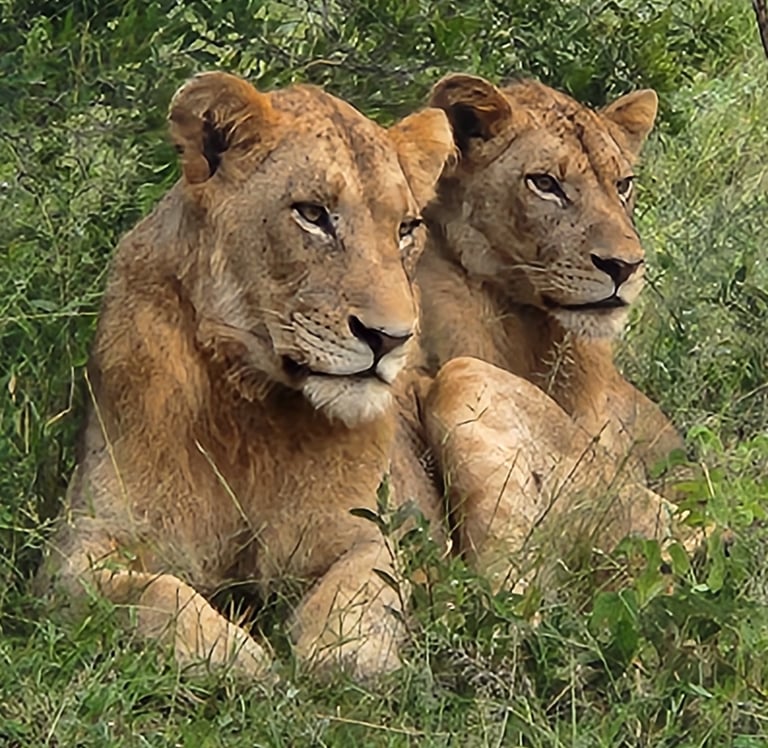
Nothing prepares you for your first game drive. Not the documentaries, not the photos, not the well-meaning advice from people who've been. You're bumping along a red-dust track at 5:30am, coffee cooling in your hand, when the guide cuts the engine and points. There, barely twenty metres from the vehicle, a lion sits in golden grass, watching you watch her. The only sound is your own heartbeat deciding whether to slow down or run.
Kruger is one of Africa's largest game reserves, and it rewards patience. We clocked the Big Five within two days: lion, leopard, elephant, rhino, and buffalo. But the moments that stayed with me were smaller, a family of meerkats posted up on a termite mound like sentinels, a hippo absolutely furious about our presence at a waterhole, the way a herd of zebra parted around the road like slow, monochrome water.
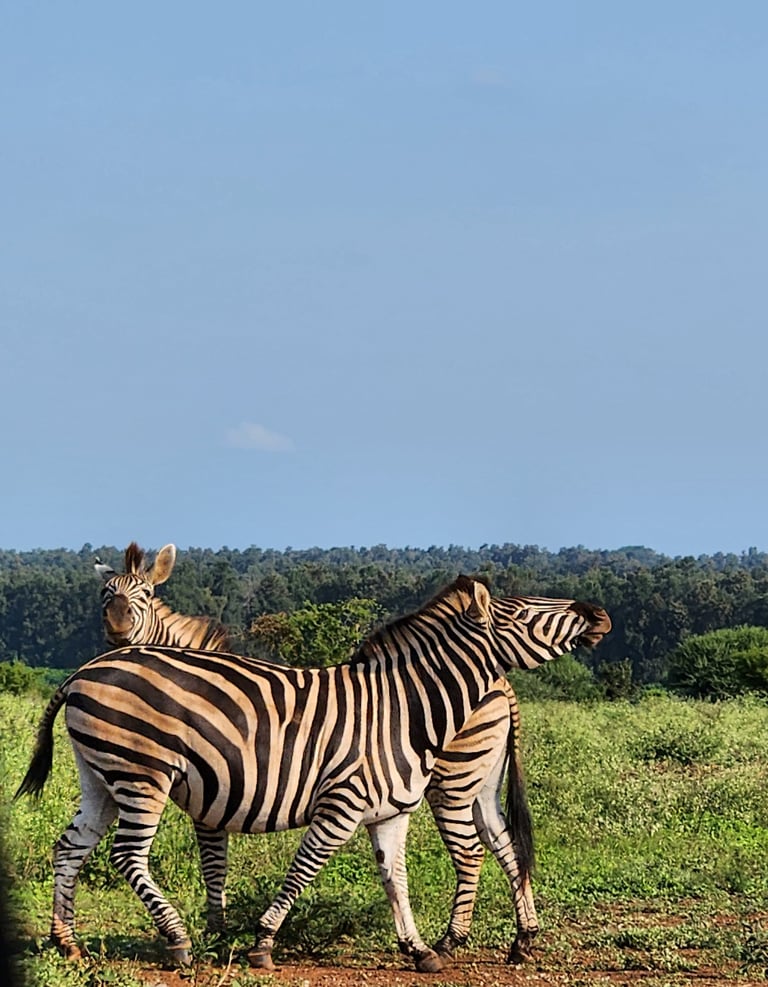
The scene that will forever remain - the first sight of free roaming zebras and I hadnt even entred the park. One sight where two zebras close hugging each other. My initial reaction was they were mates but no. The two looking out in either direction for any danger! the sight of giraffes everywhere was unbelievable.
Besides the sight of lions, the majestic cheetah , the noise hippopotamus and of course the absooutely orange sunset, it was interesting to view the greenery of the jungle. Very different to one's view of a forest where such animals would reside. The trees not very tall but bushy, grass and water everywhere. It was like watching the Lion King movie in reality.
Stay in one of the private lodges bordering the park if you can swing it. The luxury feels absurd and necessary all at once, sundowners on a deck while a hyena laughs at something in the valley below. I must add that for me, the lodge with its mosquito nets, sumptuous meals, such polite staff felt like place from another era. Reminded me of books I have read based in Africa and VS Naipaul, one of my favourite authors has written many a book with Africa being its centre.
The Garden Route, Coastal Perfection on Four Wheels
Renting a car and driving the Garden Route between Port Elizabeth (now Gqeberha) and Cape Town might be the single best road trip in the southern hemisphere. The N2 winds through indigenous forest, past plunge pools of river jade, and over mountain passes that make your palms sweat in the best possible way.
Stop in Knysna for oysters eaten standing at a harbour stall, ice cold, briny, finished with a squeeze of lemon and a glass of local Sauvignon Blanc. Push on to Hermanus during whale season (June through November) and watch southern right whales breach so close to the cliffs you could theoretically wave. Do wave. It adds something.
Cape Town, The City That Refuses to Be Ordinary
Cape Town is unfairly beautiful. Table Mountain presides over the whole thing like a civic monument, and hiking to the top at sunrise, fog rolling off the Atlantic, the city still asleep below, is the kind of experience that makes you reconsider your entire life back home.
The V&A Waterfront is touristy in the best way. Bo-Kaap's candy-coloured houses and the smell of koeksisters frying at the Saturday market in Greenmarket Square are pure Cape Malay magic. And if you drive out to the Cape Winelands, Stellenbosch, Franschhoek, you'll spend an afternoon in a tasting room overlooking vineyards and oak trees, wondering very seriously if you can just... stay.
10:58
Crossing the Border, Into Mozambique
The drive from the South African border into Mozambique is a shift in every register. The road changes texture. The signage changes language, Portuguese now, lilting and colonial, still woven into the modern fabric of a country that gained independence only in 1975. The air smells different: salt and tropical earth and something sweet you can't quite name.
And then, suddenly, you arrive somewhere that feels like it hasn't bothered with being discovered yet.
Maputo, A Capital That Dances
Mozambique's capital is a coastal city of faded colonial grandeur, wide boulevards, and a seafood culture so embedded in daily life that the smell of grilling prawns is essentially the city's unofficial anthem.
The Municipal Market is where you go first thing in the morning, armed with nothing but curiosity and a light stomach. Pyramids of mangoes, dried fish, cashews still in their shells, fabric in every colour the eye can process. Vendors call out, children dart between stalls, and somewhere deeper in the market a woman is selling piri-piri sauce from recycled bottles, labelled in beautiful hand-drawn script.
At night, the Marginal promenade comes alive. Locals walk, couples share plates of camarão (grilled prawns) served with coconut rice and matapa, a rich, earthy dish of cassava leaves cooked with peanuts and coconut milk that I ate every single day I was in the country without once getting tired of it.
Maputo's nightlife has a rhythm you either surrender to or watch from a distance. I surrendered. There was live marrabenta music, Mozambique's jubilant, guitar-driven sound, and dancing that continued until the streets went quiet and the Atlantic went pale with dawn.
Tofo Beach, Where the Whale Sharks Live
Three hours north of Maputo by bus (a journey that is itself an adventure), Tofo is the kind of beach that ruins all other beaches for you permanently. The Indian Ocean here is the deepest, warmest shade of blue. The waves roll in like they've been practising. The beach bars serve cold Dois M beer and grilled fish that came out of the water this morning.
But the real draw is underwater. Tofo is one of the world's premier spots for snorkelling and diving with whale sharks, the largest fish on earth, gentle filter-feeders that cruise these waters year-round. I jumped off a dive boat into open water and found myself alongside a 10-metre whale shark, its spotted back moving in slow, tidal waves beneath me. We swam together for what felt like five minutes and was probably forty seconds and I have not fully recovered.
Manta rays, dolphins, humpback whales (in season), Tofo's waters are extraordinary. But even sitting on the beach, watching dhow fishermen haul their wooden boats up the sand as the sun descends, is more than enough.
The Bazaruto Archipelago, The Indian Ocean at Its Most Impossible
This is where the journey reaches its crescendo. The Bazaruto Archipelago, a string of five islands off the coast of Vilanculos, is among the most pristine marine environments on the continent. Flamingos wade in the shallows. Dugongs (rare, gentle sea cows) graze in the seagrass beds. The sand is the kind of white that makes you check if your sunglasses are broken.
Getting there requires a short speedboat from Vilanculos, skimming over water that shifts from turquoise to cobalt to impossible emerald depending on the sandbar beneath you. Once on Benguerra or Bazaruto Island, the world narrows to just: this beach, this light, this moment.
I snorkelled over a coral garden so vivid it looked hand-painted. I ate a dinner of whole grilled crayfish on a deck over the water, candles flickering, the Milky Way doing its full show overhead. A fisherman came by the next morning and sold us fresh calamari directly from his bucket. We fried it on a beach fire with lime juice and chilli.
There are no adequate words for any of it. I tried to write some anyway.
10:58
Conclusion: The Trip That Gets Under Your Skin
South Africa and Mozambique together form a journey of extremes, in landscape, in sound, in flavour, in feeling. One day you're watching lions hunt at dawn. Two weeks later you're floating above a coral reef the size of a city block. Between those poles, you eat things that rearrange your understanding of food, meet people who reframe your understanding of generosity, and move through environments that make the whole idea of a "bucket list" feel laughably inadequate.
This isn't a trip you plan out of obligation. It's one you come back from and spend years trying to describe accurately to people who weren't there. Who nod politely, unable to understand why your eyes do that thing when you talk about it.
Book it. Go slow. Eat everything. Swim in the ocean at least once after dark.
You'll know why when you get there.
Write your text here...


I Went to Antarctica and Nothing Has Been the Same Since
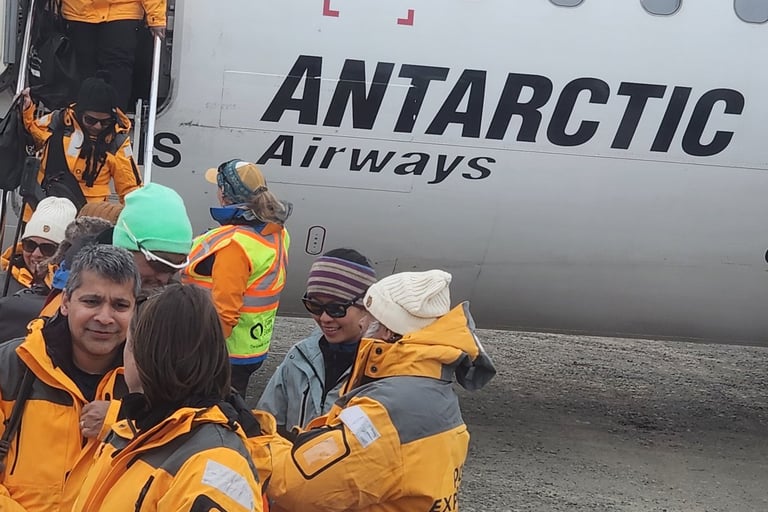
I'll be honest with you. I didn't book the trip. In fact I did not even know until I landed that Antarctica is a place to be visited for tourism purposes. My understanding up until then was that it was only for academics or for expeditions that want to study the continent.
Following the completion of Santiago and its surrounds, I was lamenting that now that I have done all six continents , 7th will always remain out of reach. Little did I know know that the very next day I will be flying to St Georges Island, almost 4 hrs from the Southern most part of Chile/South America - Peunta Arenas to this beautiful untouched in some ways, continent. Now I think, not just the setting foot on the continent but keeping this journey under wraps for this long was equally astonishing😊. The journey was a surprise gift to celebrate 40 long years of togetherness! Call me naïve call me ignorant, the first inkling that I will be going to Antarctica came when I went to attend the seminar the day before flying out!! I have to say I was overwhelmed and so apprehensive about flying there with pre conceived notion of wild weather - but hey it was one my smoothest flight ever!
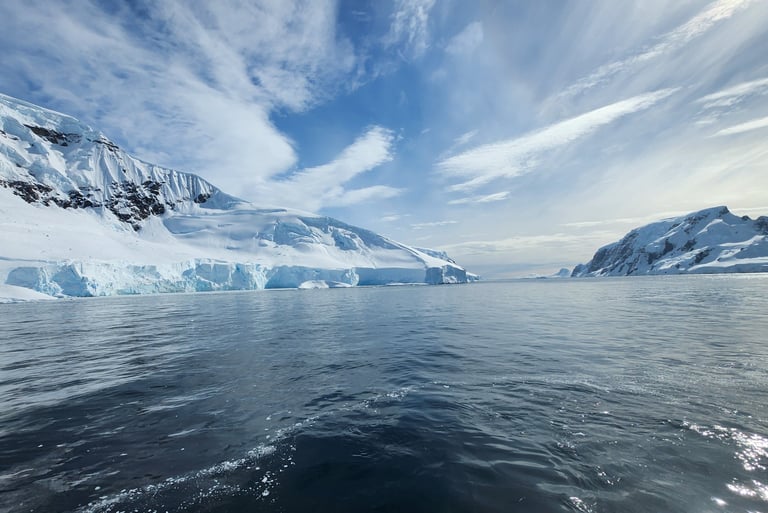
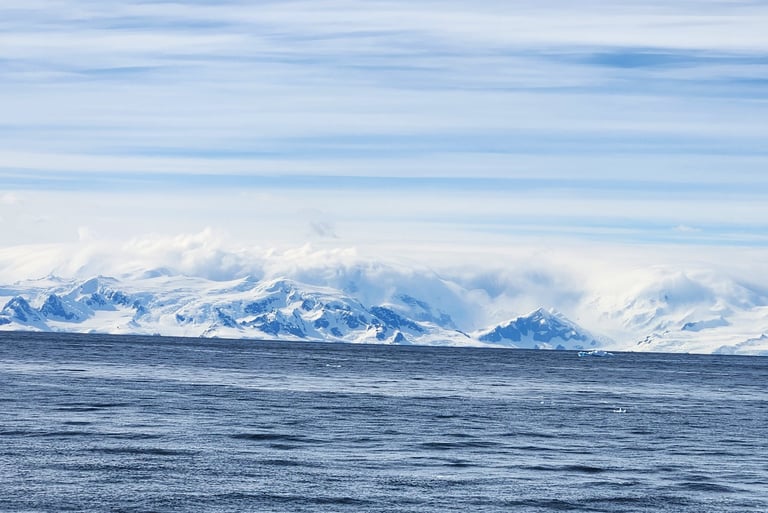
It felt too far, too cold, too expensive, too unapproachable, too much of everything. Setting my eyes on the continent for the first time, that feeling of complete awe will forever remain with me. So many thoughts going in my head about its unfathomable beauty. For me, it felt like walking on the moon or conquering mount Everest. I thought perhaps this is how Nell Armstrong felt setting foot for the frist time time on the mkon or Edmund Hillary on mout everest!! It requires careful planning as well immense physical and mental strength, looking back I realized.
Seeing Antarctica was surreal and deeply profound at the same time. I have never felt so small in this grand scheme of this universe or as its called in Sanskrit - Brahmand.
But standing on that ice, watching a penguin waddle straight toward my boots like I owed it money, I thought, why did I wait so long?dfcbzfgnxfghmnghnmgj,mc ,
If you're a first-timer thinking about Antarctica, this is for you. Everything I wish someone had told me before I went. cxvThe Wildlife Is Unreal (And Totally Unbothered by You)
Wild Life
I was not prepared for how close the animals get.
Penguins don't know what fear is. A Gentoo penguin walked right up to me, tilted its head, and just... stared. For a solid 30 seconds. I didn't move. I barely breathed. It eventually waddled off like I was the weird one, which honestly, fair.
The colonies are massive and chaotic and loud and they smell like you wouldn't believe, but I loved every second of it. Thousands of penguins just living their lives, completely indifferent to the humans standing there with their mouths open.
Then there were the seals. Weddell seals sprawled across ice floes like they'd never heard the concept of stress. And the leopard seals, gorgeous, enormous, deeply intimidating. I kept a respectful distance. They did not seem to care either way.
The moment that really got me? A humpback whale surfaced right next to our Zodiac (the small inflatable boat we used for landings). Close enough to hear it exhale. I genuinely teared up. I'm not ashamed. at one time there were three together and we could almost touch it.
And the albatrosses that followed the ship for days, watching a wandering albatross glide without a single wingbeat in wild Antarctic wind is the kind of thing that makes you feel very small and very grateful at the same time.
The Weather Tried to Humble Me (It Succeeded)
People hear "Antarctica" and picture a frozen hellscape. The reality, at least in summer (November to March, when most of us visit), is more nuanced than that.
Most days on the peninsula were around 0°C (32°F). Chilly, sure, but manageable when the sun came out. Some afternoons felt almost pleasant. I unzipped my jacket and everything.
Then the wind showed up.
Katabatic winds are no joke. They come barrelling down off the ice cap with zero warning, and suddenly your pleasant shore landing turns into a full-body lean-into-the-gale situation. One gust nearly took my hat clean off my head. I learned fast: hood up, chin down, always.
Here's what I packed and actually used every single day:
Waterproof outer layer, my cruise provided a parka, check if yours does too before buying one
Thermal base layers, the kind you can add and peel off quickly
Waterproof trousers, Zodiac landings will splash you, no question
Fleece mid-layer, the unsung hero of the whole trip
Waterproof gloves, not water-resistant, waterproof. Trust me on this one
A hat that covers your ears, non-negotiable
Layer up, layer down, repeat all day. That was the rhythm.
Preferable
I know it's not cheap. I know it's not easy to get to Puente Arenas but its once in a lifetime journey specially for mere mortals like me. I know it takes immense planning - more so if happens to be a surprise visit! But But But - - If possible, I would suggest flying there instead of on a cruise as Drake passage is brutal and adds almost 4 days to the journey.
Cold kills your camera battery fast. Keep a spare battery in your inner chest pocket, body heat keeps it alive. Also, bright white ice messes with automatic camera settings constantly, so learn to shoot manually or at least in RAW format so you can fix exposure later.
Put the camera down sometimes. I had to remind myself of this every day. The silence, the scale, the crazy blue of deep glacier ice, none of it fully translates to a photo. Some of my best memories from the trip are the moments I just stood there and let it land.
You will have a moment. At some point, standing in a bay surrounded by icebergs with no sound except maybe a distant penguin squawk, something is going to hit you. I cried. Other people I spoke to cried. Antarctica has a way of cracking you open a little. It's a good thing.
But I have never come back from a trip more changed. Not the most beautiful, not the most fun, the most meaningful. It put the whole world in perspective in a way I'm still processing.